Which muscles do you work most during Pilates?
Pilates is a form of exercise that primarily works your core, including your abdominal, back and pelvic floor muscles. It also engages stabilising muscles throughout your body, from your shoulders to your legs. Controlled movements and a focus on breathing help you develop functional strength and stability.
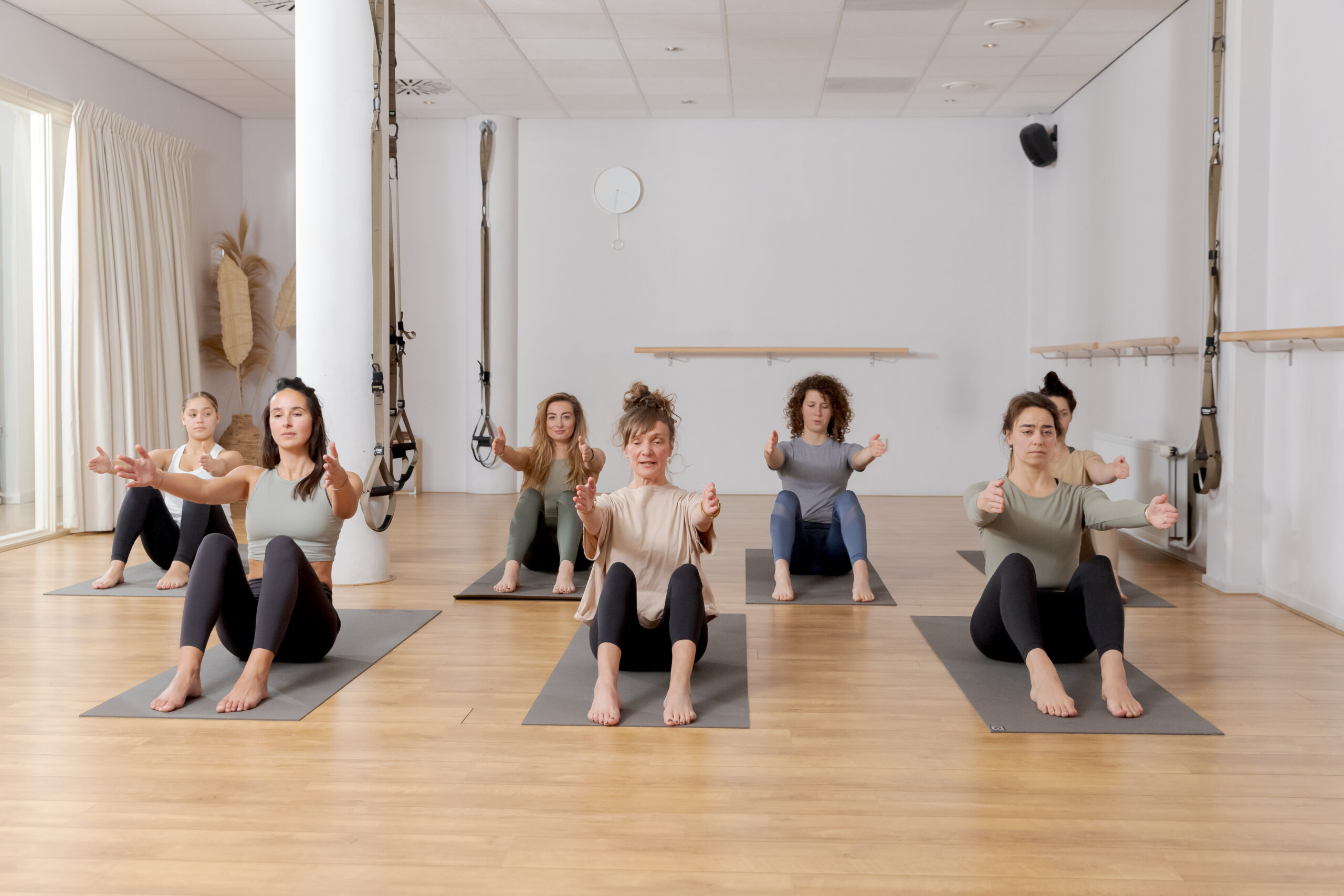
What is Pilates, and why is it effective for muscle training?
Pilates combines controlled movement, mindful breathing and mental focus. This holistic approach engages several muscle groups at the same time, helping you develop strength you can use in everyday life.
Pilates combines movement with isometric holds: in some exercises, your muscles maintain tension while you hold a position. In others, they work as you move through a controlled range. Coordinating your breathing with these movements helps you maintain control and focus on your technique.
Pilates trains your body as a whole. You work on posture, coordination and balance, paying attention to how each movement feels. Quality and control are central to the practice.
Which muscle groups do you work most during a Pilates session?
Your core is central to Pilates. This includes the deep abdominal muscles, back muscles, pelvic floor and diaphragm. Together, these muscles help support your trunk and are involved in many Pilates exercises.
Your stabilising muscles also play an important role. These include muscles around your shoulder blades, hips and spine that help you maintain alignment and control.
Other muscle groups you regularly work include:
- Glutes for hip stability and strength
- Quadriceps and hamstrings for leg strength
- Back muscles to support your posture
- Arm and shoulder muscles during weight-bearing and resistance exercises
- Pelvic floor muscles as part of coordinated core work
The muscles you engage depend on the exercises and equipment used. Mat Pilates uses your body weight, while small equipment such as balls, rings and resistance bands can add variety. Pilates machines, such as a reformer, provide another way of adding resistance.
How does Pilates compare with other forms of strength training?
Pilates emphasises controlled movement, coordination and stability. You work with your whole body, learning to move with awareness and support from your core.
Strength training can also involve whole-body movements, as well as exercises targeting specific muscles. It often uses external weights and progressively increasing resistance to develop strength and muscle mass.
Pilates includes both static holds and moving exercises. Holding a position challenges muscular endurance, while controlled movement helps you practise strength through different ranges of motion.
The combination of focus, breathing and movement is a distinctive part of Pilates. It offers a way to build body awareness alongside physical strength, and can complement other workouts.

Why is your core so important in Pilates, and how do you train it?
Your core provides support for movement. Working on these muscles can help you maintain balance, control your posture and move with greater confidence.
Your core includes more than your abs. The deep abdominal muscles, back muscles, pelvic floor and diaphragm work together to support your trunk. Muscles around your hips also contribute to control and stability.
Useful principles for core work in Pilates include:
- Coordinating muscle engagement with breathing
- Allowing time to breathe and relax between efforts
- Maintaining a comfortable, controlled spinal position
- Building exercise intensity gradually
- Focusing on movement quality rather than speed
Classic exercises such as the hundred, roll-up and plank variations challenge your core as you hold a position or move your arms, legs and trunk. Your instructor can help you choose variations that suit your level.
How bbb health boutique supports your Pilates journey
At bbb health boutique, Pilates is part of a holistic approach to movement and wellbeing. Our instructors help you learn the exercises and find a way of moving that suits your experience and goals.
Discover Pilates with:
- Personal guidance adapted to your level and goals
- Small group classes with attention to technique
- Pilates in the studio and in our comfortably warm hot cabins
- Varied exercises using body weight and small equipment
- Coaching to help you build and maintain your routine
- Attention to body, food & mind throughout your healthy journey
Experience it for yourself during a free trial workout. Many people find the warmth of our hot cabins pleasant and relaxing, and it can make a session feel comfortable and enjoyable, giving you a moment just for you.