What Really Makes You Lose Weight?
Weight loss comes down to a calorie deficit: you burn more energy than you consume. For weight loss itself, it doesn’t matter whether those calories come from carbohydrates, protein or fat. Your body loses fat according to a genetically determined pattern, while exercise supports the process by increasing your energy expenditure and helping you maintain muscle mass. A combination of healthy nutrition and regular exercise generally provides the best and most sustainable results.
What really makes you lose weight: calories or carbs?
You lose weight by creating a calorie deficit, meaning you use more energy than you consume. Whether those calories come from carbohydrates, protein or fat does not, in itself, determine whether you lose weight. Ultimately, your energy balance determines whether you lose, gain or maintain weight.
Carbohydrates have developed a bad reputation, but they do not automatically make you gain weight. What matters is how much you eat and the type of carbohydrates you choose. Whole-food carbohydrate sources such as oatmeal, whole grains and vegetables provide sustained energy and can help you feel full for longer. Refined carbohydrates such as sugar and white bread are generally less filling and can cause faster fluctuations in blood sugar.
Each macronutrient has an important function in your body. Carbohydrates provide energy for your brain and muscles. Protein helps build and repair muscles and other tissues. Fats support hormone production and the absorption of certain vitamins. A healthy diet can include all three in appropriate proportions.
For sustainable weight loss, practical weight loss tips matter: eat enough protein to help maintain muscle mass, choose nutritious foods that keep you satisfied, and create a calorie deficit that you can maintain without constantly feeling hungry. Extreme diets that eliminate entire food groups are often difficult to sustain in the long term.
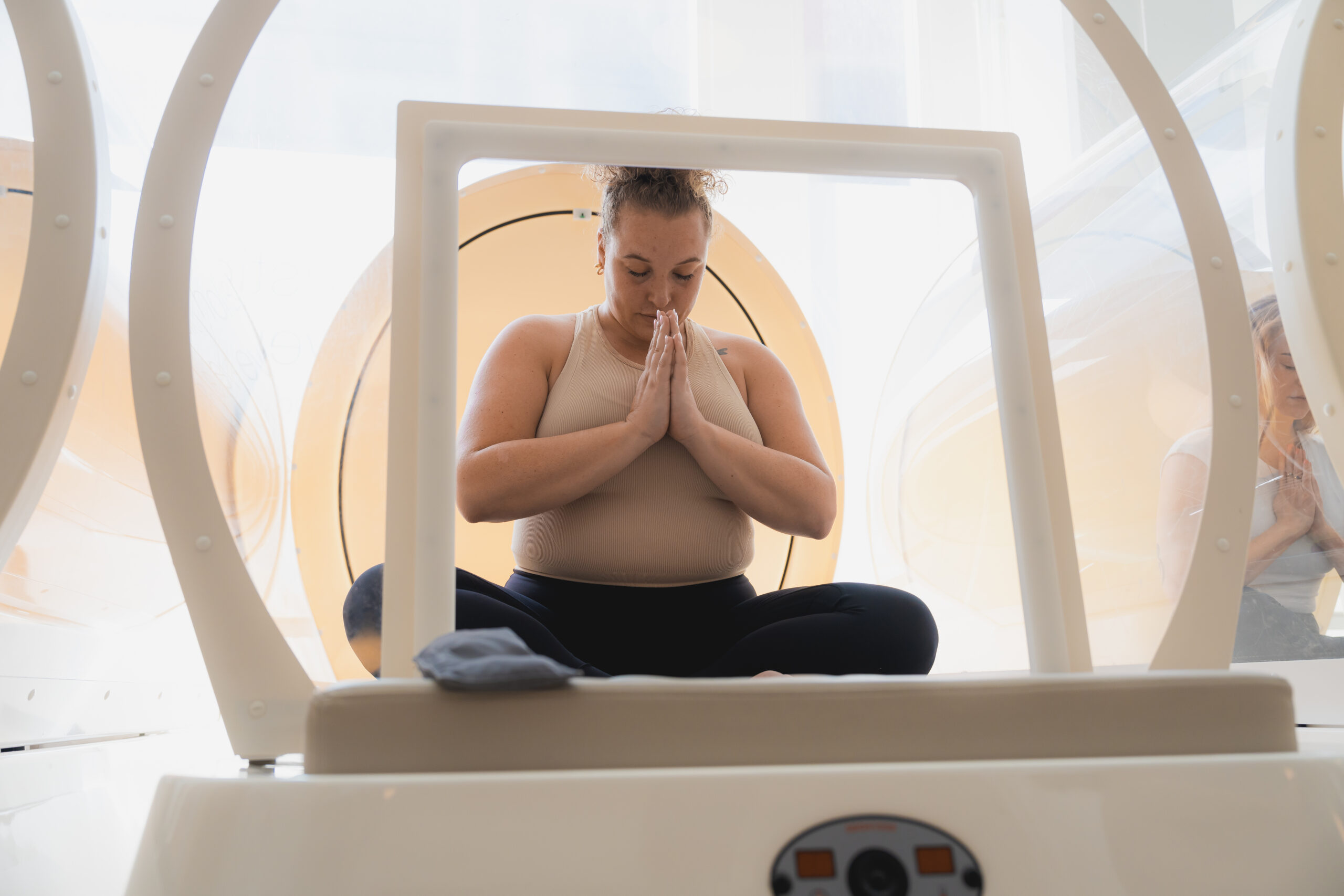
Book your free trial workout here and experience the difference.
Which parts of your body lose fat first?
Your body loses fat according to a genetically influenced pattern that differs from person to person. Targeted fat loss from one specific area — also known as spot reduction — is not possible. Where you lose fat first and where it tends to remain longest is influenced by factors including genetics, hormones, age and sex.
Many women notice changes in areas such as the face, arms or upper body before seeing significant changes around the hips, thighs or lower abdomen. However, there is no fixed order that applies to every woman.
Different types and locations of body fat also respond differently to metabolic and hormonal signals. Subcutaneous fat sits underneath the skin, while visceral fat is stored around the internal organs. Sex hormones such as oestrogen also influence how and where fat tends to be stored, which is one reason women often carry relatively more fat around the hips and thighs.
Patience is important when losing weight. Even if you don’t immediately see changes in the areas you are most focused on, your body composition may still be changing. Don’t rely on the scales alone: consider your measurements, how your clothes fit, your strength, energy levels and how you feel. Consistent healthy habits matter more than trying to control exactly where your body loses fat.
How does exercise help you lose weight?
Exercise supports weight loss by increasing your energy expenditure while helping you maintain or build muscle mass. During a workout you use energy directly, while regular strength training can help preserve lean muscle during weight loss. This is particularly important because muscle tissue contributes to your resting energy expenditure.
Different forms of exercise offer different benefits. HIIT (High-Intensity Interval Training) can provide a relatively high energy expenditure in a short workout and temporarily increase oxygen consumption after exercise. Strength training helps maintain and build muscle. Pilates strengthens your core, improves stability and can support better posture. Yoga can help with mobility, relaxation and stress management.
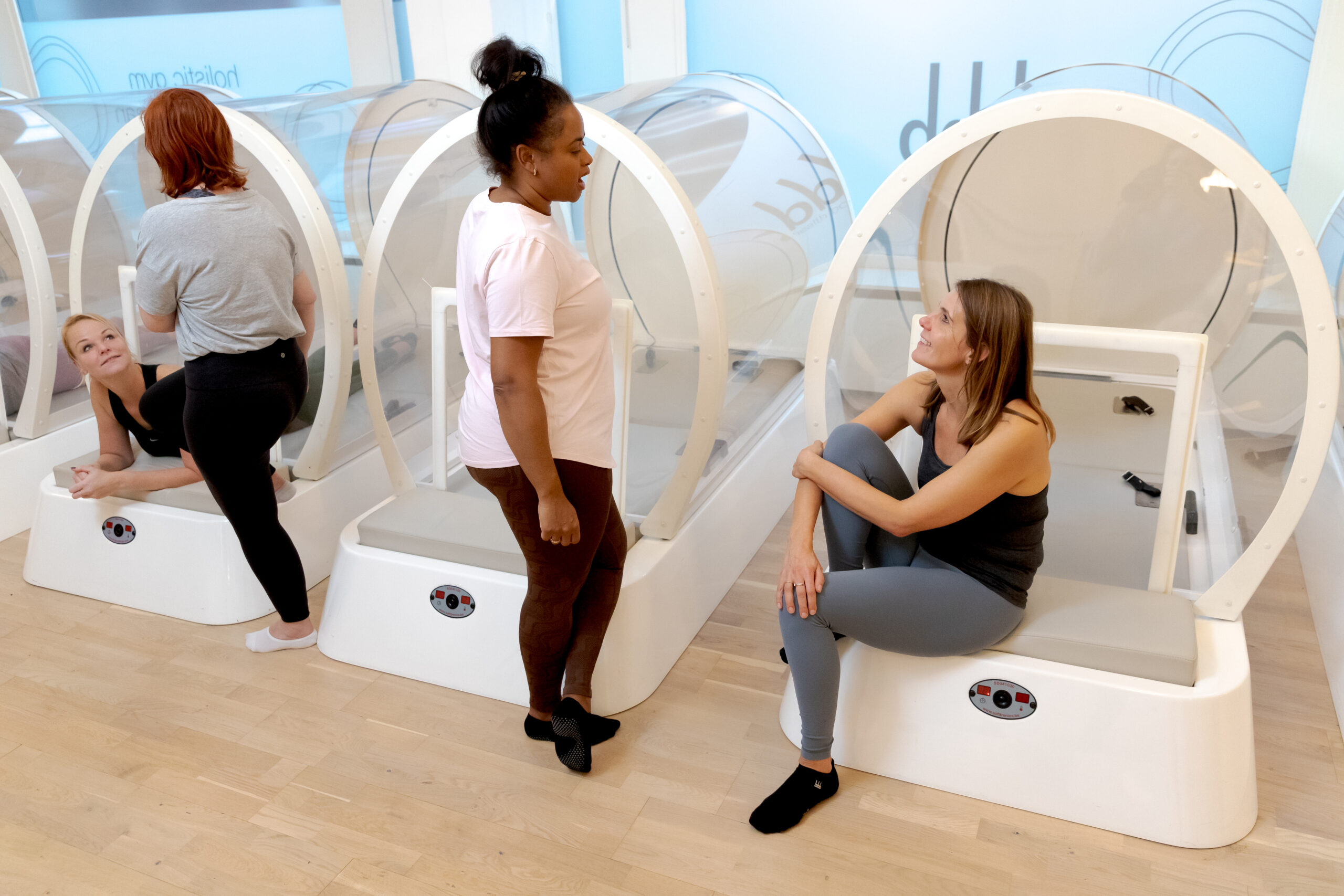
Exercising in warmth, such as in a hot cabin, can offer a different workout experience. The warmth increases blood flow to the skin and may make muscles feel more flexible and relaxed. Your cardiovascular system also has to work harder to regulate body temperature. However, sweating more does not automatically mean that you are burning more body fat — much of the immediate weight loss after a hot workout is simply fluid loss and should be replenished by drinking enough water.
Variation can make your exercise routine enjoyable and help you train different aspects of fitness. Combine strength training with cardiovascular exercise and mobility work, listen to your body and build up gradually. Consistency is ultimately more important than pushing yourself to the limit.
What is more important for weight loss: nutrition or exercise?
Nutrition generally has the biggest direct influence on weight loss because it determines how much energy you consume. However, there is no scientifically fixed 70/30 or 80/20 rule. For healthy and sustainable weight loss, nutrition and exercise work best together because each contributes something different to your health and long-term results.
Nutrition has a direct influence on your calorie intake and therefore your energy balance. In practice, it is often easier to reduce your energy intake moderately than to compensate for a large calorie surplus through exercise alone. This makes nutrition an important foundation for weight loss.
But exercise offers much more than calorie expenditure. It improves fitness, strengthens muscles and bones and supports physical and mental health. Exercise is also particularly valuable for maintaining muscle mass during weight loss and can play an important role in maintaining your weight afterwards.
A holistic approach combines body, food and mind. Training your body, improving your nutrition and supporting your mental wellbeing can reinforce one another. Stress, sleep and emotions can all influence appetite, food choices, recovery and how easy it feels to maintain healthy habits. By looking at the bigger picture, you can create a healthy lifestyle that is realistic and sustainable.
Start your health journey at bbb health boutique. Book a free trial workout and discover our unique combination of workouts, coaching and a holistic approach to body, food & mind.