Does Pilates Make You Muscular?
Pilates definitely makes you stronger and can give your muscles more definition, but it won’t make you bulky like a bodybuilder. The training method focuses primarily on your deep muscles, core stability, control and muscular endurance. The result can be a stronger, more defined body and functional strength that you notice in everyday life. Below, we answer the most important questions about Pilates and building muscle.
What does Pilates actually do to your muscles?
Pilates primarily activates your deep stabilising muscles, particularly around your core, pelvis and shoulders. These muscles can be underused in other forms of exercise, but they are essential for posture, balance and movement control. By performing controlled movements using your own body weight and other forms of resistance, you train both muscular strength and coordination.
The method works differently from traditional strength training. While weight training can focus on increasing muscle mass through progressively heavier resistance, Pilates places greater emphasis on control, stability, mobility and muscular endurance. You often train several muscle groups simultaneously in functional movement patterns that translate well into everyday life.
During a Pilates workout, your abdominal muscles, back, pelvic floor, shoulders and legs work together. The exercises also improve neuromuscular control — the communication between your brain and muscles — helping you move more efficiently. This can result in better coordination, increased body awareness and a stronger core that supports your entire body.
Book your free trial workout here and experience the difference.
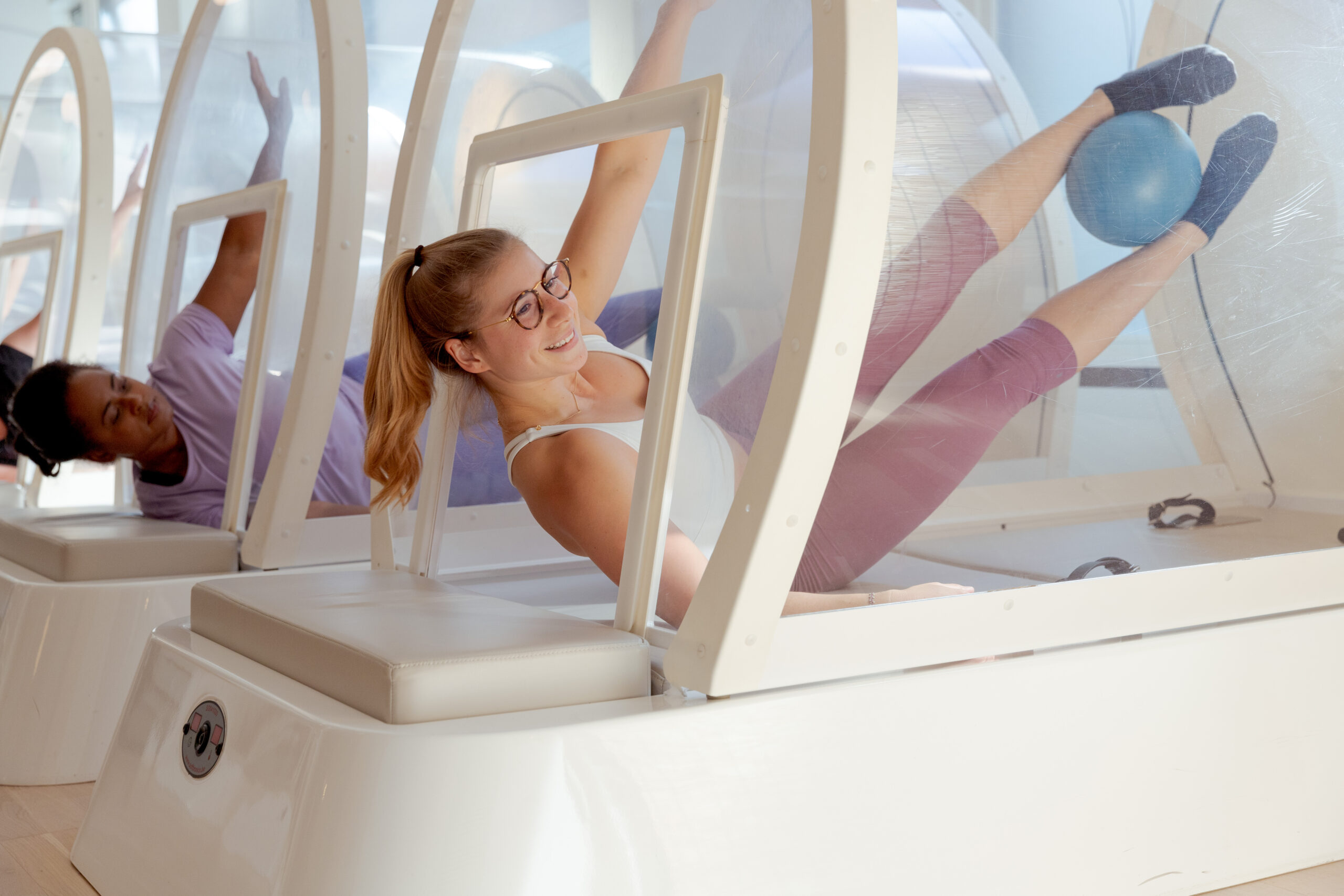
Does Pilates really build muscle, or does it just make you stronger?
Pilates primarily makes you stronger and more defined, although it can also build some muscle. However, it generally won’t create the same amount of muscle growth as progressive resistance training with heavy weights.
What you can expect is a stronger body with more visible definition. Your core can become firmer and stronger, your arms and legs can gain definition, and improved posture can change the way you carry your body. How visible these changes become also depends on factors such as your starting point, genetics and body-fat percentage.
It’s important to note that Pilates does not literally create “longer muscles” — muscle length is largely determined by your anatomy. What Pilates can do is improve mobility, posture, strength and muscle tone, which can contribute to the lean, elongated appearance often associated with Pilates.
The functional strength you develop has practical benefits too. You may notice that carrying heavy shopping bags becomes easier, that you can maintain good posture for longer, or that you feel more stable during other sports. Pilates helps you build a strong, mobile body that functions well in everyday life.
How quickly can you see results from Pilates?
You may start to feel changes in strength, stability and body awareness within several weeks of practising Pilates regularly. Visible changes usually take longer and vary considerably from person to person.
There is a famous Pilates saying suggesting that you’ll feel a difference after 10 sessions, see a difference after 20 and have “a whole new body” after 30. It’s a motivating idea, but not a scientifically established timeline. Your individual results depend on factors such as how often and intensively you train, your starting point, nutrition, sleep, stress and genetics.
The first improvements you notice may be less visible: better posture, improved core stability, smoother movement and greater body awareness. These changes can begin within the first few weeks of consistent training.
A realistic progression might look something like this:
- First few weeks: Improved body awareness, core activation and movement control
- After consistent training: Increased strength, stability and flexibility
- Longer term: More visible muscle definition and continued improvements in posture, strength and movement quality
Consistency matters much more than reaching a particular number of sessions.
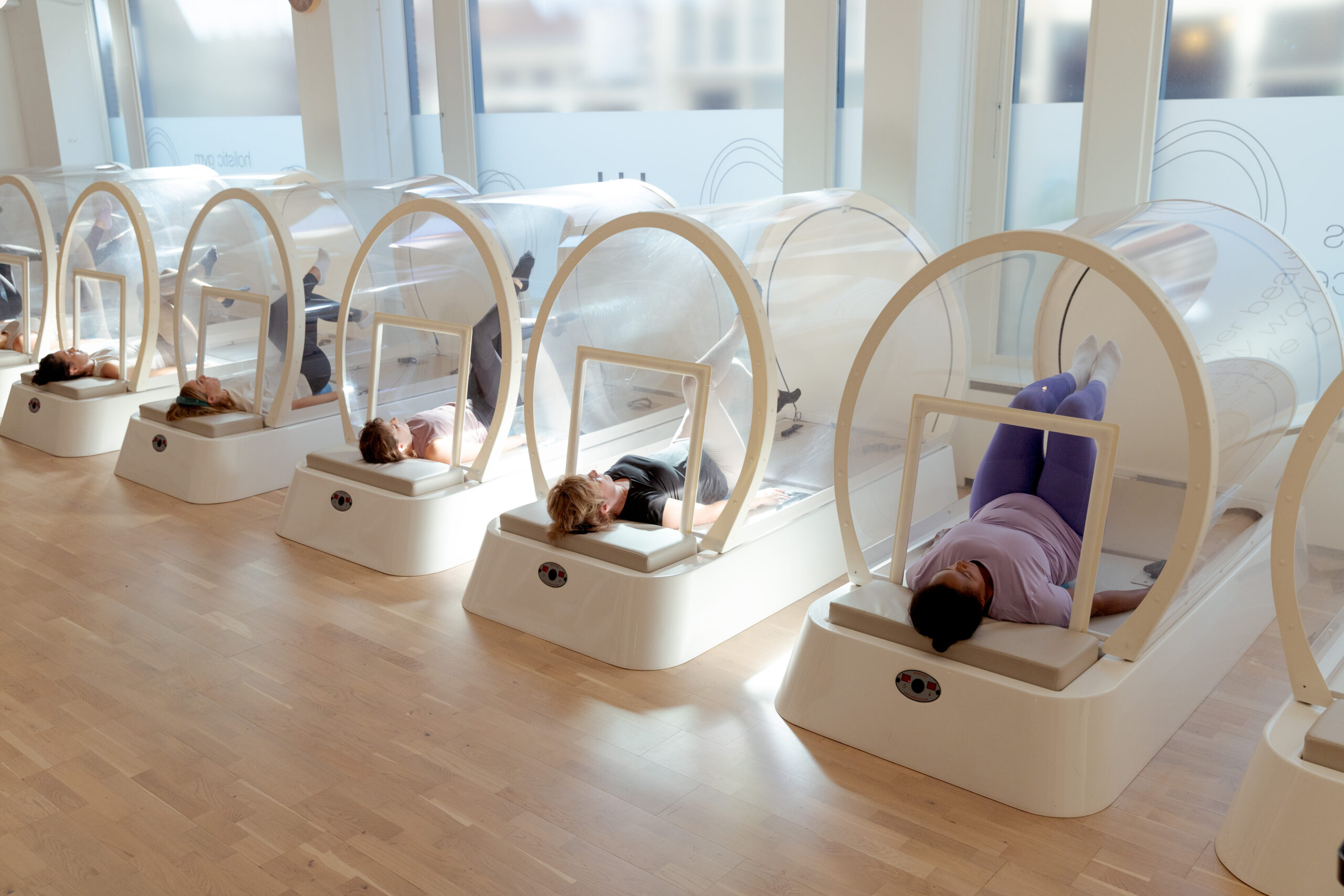
What is the difference between regular Pilates and hot cabin Pilates for building muscle?
Hot cabin Pilates takes place in a heated environment of around 40°C. The warmth can make your muscles feel warmer and more flexible, which many women find pleasant when moving and stretching.
Training in the heat also places additional demands on your body’s temperature regulation. Your heart rate may rise and you’ll generally sweat more. However, sweating more does not automatically mean you’re burning more fat, and any immediate weight loss after a hot workout is primarily fluid loss.
The heat itself does not necessarily cause greater muscle growth. The biggest stimulus for becoming stronger still comes from the Pilates exercises themselves: resistance, control, progression and consistent training.
At bbb, we find that many women enjoy the feeling of exercising in warmth and experience it as a comfortable environment for movement and stretching. It can make a short, focused Pilates session feel very different from exercising at room temperature.
Make sure you stay well hydrated and listen to your body, particularly when you’re new to exercising in a heated environment.
Should you combine Pilates with other training for optimal results?
Pilates works very well as a standalone form of exercise, but combining it with other types of training can create a more complete fitness programme.
It depends on your goals. If you primarily want to become stronger, improve your core stability and increase mobility, Pilates can play a major role in your routine. If you also want to improve cardiovascular fitness, adding HIIT or another form of cardio can be useful. If building significant muscle strength or mass is your goal, progressive resistance training can complement Pilates particularly well.
A holistic body-food-mind approach brings exercise, nutrition and mental wellbeing together. Pilates provides a strong foundation for core strength and movement control, while HIIT can improve cardiovascular fitness and TRX can further develop functional strength. Yoga can complement this with mobility, relaxation and stress management.
For many people, training around 2–4 times a week can work well, depending on fitness level, intensity and recovery. For example, you could combine two Pilates workouts with a strength or cardio session. Variety can keep training enjoyable while challenging your body in different ways.
And remember: your progress doesn’t only happen during your workout. Eating enough protein supports muscle maintenance and recovery, carbohydrates provide useful energy for exercise, and adequate rest and sleep help your body recover.
Whether you choose Pilates alone or combine it with other forms of exercise, consistency is key. Regular movement, nutritious food and sufficient recovery can help you become stronger, improve your body composition and feel better in your body.
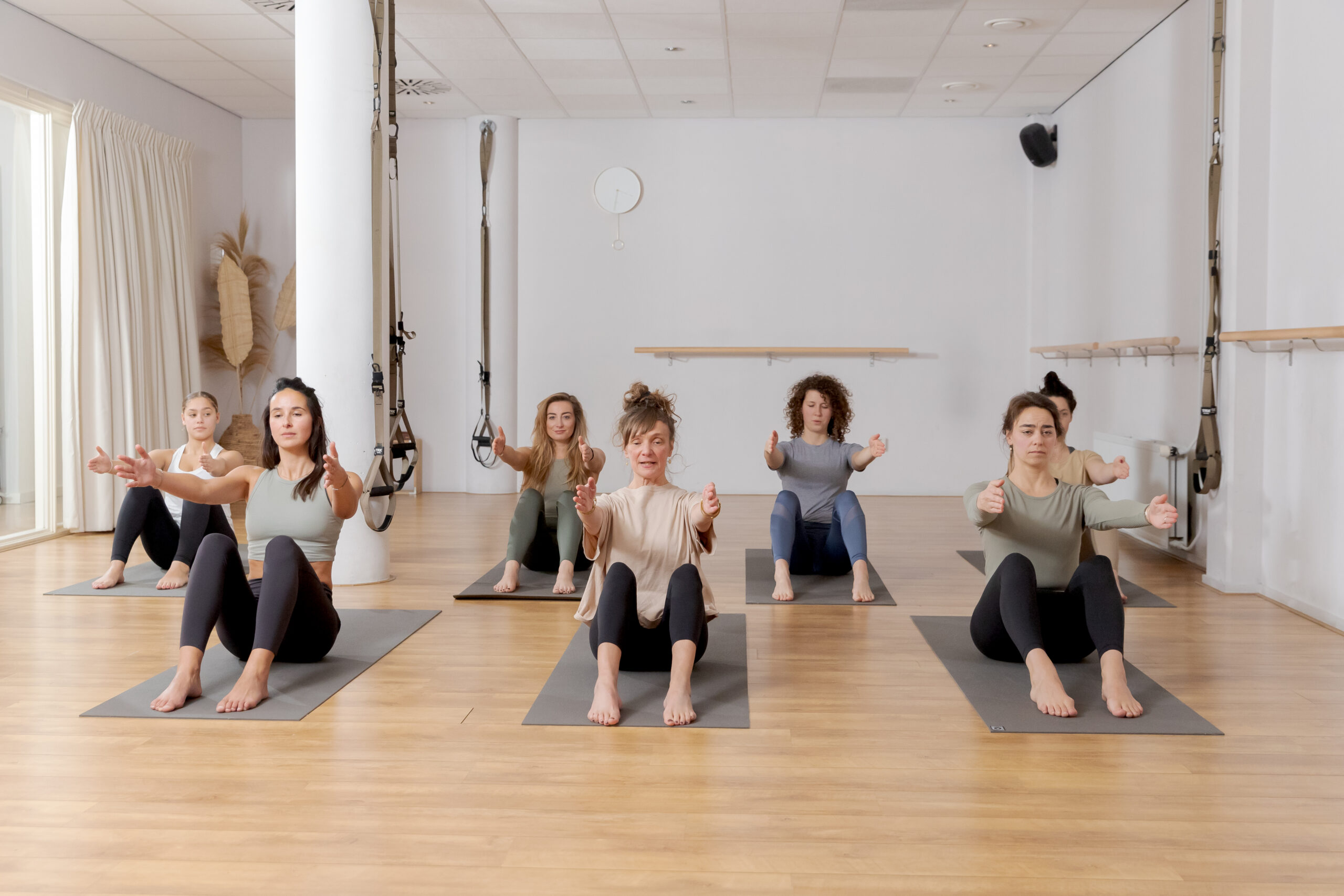
How bbb health boutique helps you get more from your Pilates workouts
At bbb health boutique, we take a holistic approach to Pilates and your overall health. We combine movement with personal guidance around body, food and mind, helping you build healthy habits that work for you.
Here’s how we support you:
- Hot cabin Pilates: Focused Pilates workouts in a heated environment of around 40°C
- Food coaching: Personal guidance to support your nutrition, energy and recovery
- Body-food-mind coaching: A holistic approach that brings movement, nutrition and mental wellbeing together
- Personal guidance: Support with technique and finding workouts that suit your body and goals
- Varied workouts: Combine Pilates with strength, cardio, yoga and other training styles
Start your health journey at bbb health boutique. Book a free trial workout and discover how our unique combination of movement, warmth and personal coaching can help you feel stronger and more at home in your body.