How often do you need to do Pilates to see results?
Choose a Pilates routine that suits your goals, experience and recovery. One weekly class can be a practical start. Your coach can help you build gradually and combine Pilates with other movement. There is no fixed minimum that guarantees visible results.
Start with a manageable rhythm and review how you feel between sessions. More frequent training is not automatically better; technique, an appropriate level of challenge and recovery matter too.
Book your (free) trial class and feel the difference.
How often do you need to do Pilates to see results?
As a beginner, focus on learning movements and finding a routine you can maintain. Discuss your starting point with your coach rather than copying a fixed number of weekly classes.
One or two weekly sessions can still be valuable. Progress depends on the exercises, level of challenge, consistency and your starting point. Three sessions are not a universal minimum for improvement.
Notice how your technique and movement control develop. Visible changes vary, so avoid a deadline for what your body should look like.
What are the benefits of doing Pilates daily?
Daily Pilates offers benefits such as improved muscle memory, faster development of technique, and a stronger connection between body and mind. By moving every day, Pilates becomes a natural part of your routine. Your body learns movement patterns more quickly and your posture noticeably improves. The mental benefits are significant as well: daily movement helps reduce stress and increases your energy levels.
Still, training daily isn’t suitable for everyone. Your body needs recovery time, especially when you train intensively or in a heated environment such as our hot cabin. If you practice Pilates daily, it’s wise to vary the intensity: alternate harder sessions with lighter, more restorative classes like yin yoga or gentle Pilates.
Listen closely to your body. If you feel fatigue, muscle soreness, or reduced motivation, it may be a sign that you need more rest. For most people, training 4 to 5 times per week is a sustainable frequency that delivers excellent results without risking overuse. Recovery is just as important as the workout itself, because it’s during rest that your muscles grow and real progress occurs.

How does hot cabin Pilates affect your training frequency?
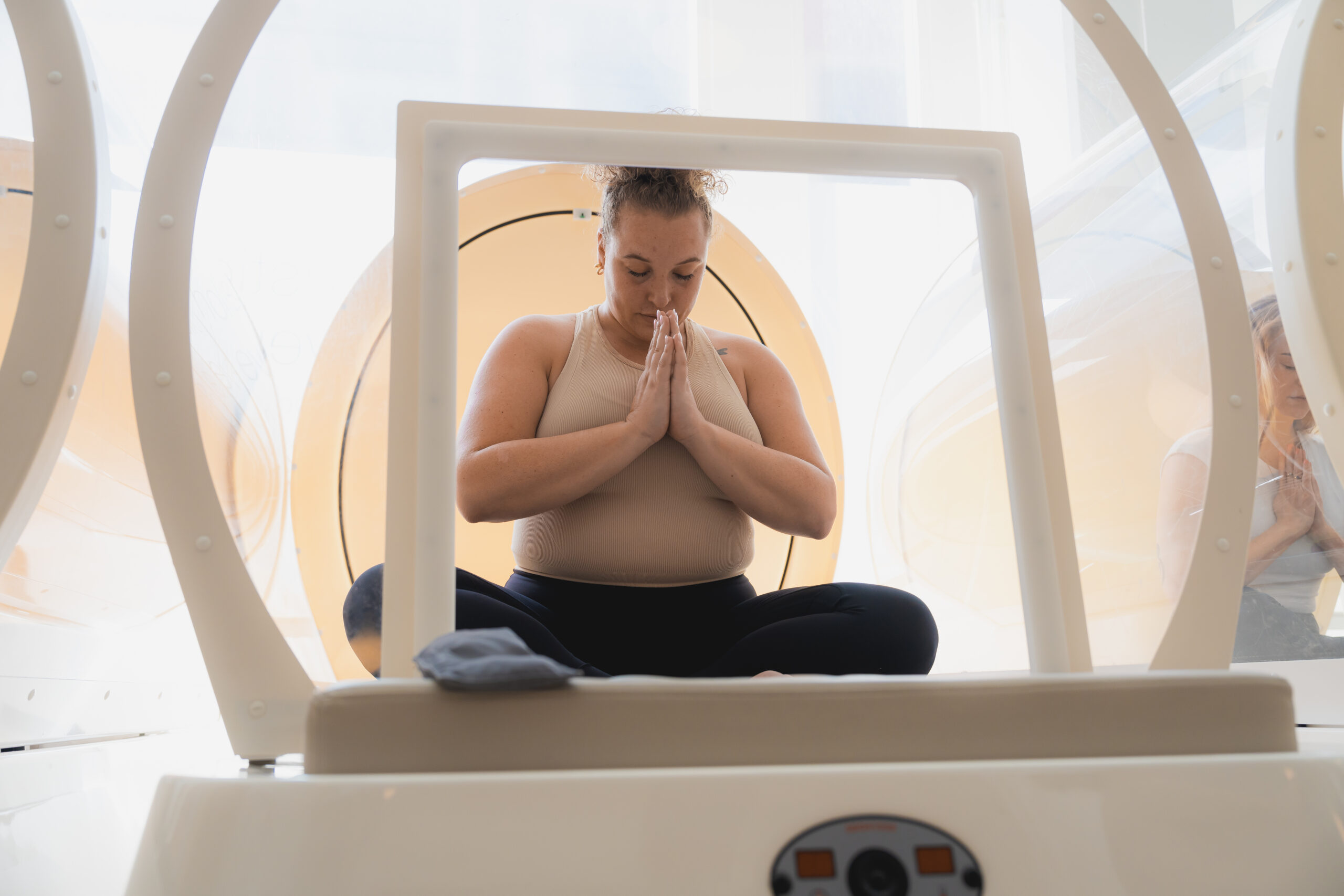
In a bbb hot cabin, you exercise at around 40°C with your head outside. The warmth may feel pleasant. Your coach helps you choose exercises and a comfortable range of movement; heat does not automatically make a workout more effective.
Discuss your hot cabin routine and recovery with your coach. The right frequency varies by person, workout and level of challenge. Stay hydrated and take a break if you feel uncomfortable.
Warmth can feel comfortable when muscles feel stiff. Sweating causes fluid loss and is not proof of detoxification or greater fat loss. We do not promise faster results from warmth.
When will you see the first results from Pilates?
Your first signs of progress may be better movement control or more confidence performing an exercise. When this happens varies.
Review your technique, resistance and repetitions with your coach. Compare similar sessions rather than expecting the same progress every week.
Visible changes in muscle definition and body shape vary. A consistent routine, adequate nutrition and recovery matter, without a guaranteed transformation timeline.
How should you combine Pilates with other workouts for optimal results?
Pilates pairs extremely well with other forms of training and even enhances your performance in other sports. The core strength and flexibility you build form a strong base for nearly every athletic activity. A balanced weekly schedule combines Pilates with cardio or strength training for complete fitness results.
An effective weekly routine might look like this:
- 2 to 3 Pilates sessions for strength and flexibility
- 1 to 2 HIIT or cardio sessions for endurance and fat burning
- 1 to 2 yoga or barre sessions for balance and recovery
This variety prevents overloading the same muscle groups and keeps your training interesting. Pilates is the perfect complement to high-intensity workouts because it focuses on recovery, lengthening, and control.
By alternating different forms of exercise, you can easily create a well-rounded programme: combine Pilates with functional strength training, HIIT for cardio, or yoga for relaxation. This holistic approach ensures your body develops in all areas without becoming overtrained. Avoid scheduling intense workouts on consecutive days and listen to signs of fatigue. A balanced schedule gives the best and most sustainable results.

Which Pilates frequency suits your personal goal?
Your goals help shape your routine. If weight management is one of them, discuss movement, nutrition and lifestyle together with your coach; sweating or attending a fixed number of Pilates classes does not guarantee weight loss.
If your goal is muscle definition and strength, 3 to 4 Pilates sessions per week are ideal. Focus on workouts that challenge you and push your boundaries. Recovering from an injury requires a different approach: 2 to 3 sessions per week under professional guidance, building up gradually and listening closely to your body. Physiotherapy support can be helpful here.
For stress reduction and mental balance, 2 to 3 sessions per week are sufficient. Pilates helps you relax, breathe more consciously, and be more present in your body. Athletes who use Pilates to improve performance often train 2 to 3 times per week as a supplement to their main sport. It strengthens your core, prevents injuries, and improves movement quality.
A personal intake with a professional to assess your goals, condition, and possibilities helps create the right training plan. This ensures your programme is realistic and fits your life. The best results don’t come from the toughest schedule, but from the schedule you can maintain consistently.
Build your Pilates routine at bbb
At bbb, women of all ages and fitness levels are welcome. Choose mat Pilates, Hot Pilates or a personal workout. Your coach helps you explore suitable exercises and a manageable routine. Classes vary by boutique. Read about Pilates once a week and combining movement with strength training.
Recovery and exercise with physical complaints
bbb also supports recovery and rehabilitation and exercise with physical complaints, such as a herniated disc, rheumatism or a frozen shoulder. Your coach adapts exercises to your needs and takes advice from your physiotherapist or treating clinician into account where needed.
Start with a holistic intake and free trial
A personal trial lasts 45 minutes: a holistic intake, a tailored workout and a conversation afterwards. We discuss goals, experience, energy and any physical complaints. You can experience the hot cabin and discover which workouts and coaching suit you. Each hot cabin group class has one trial place, allowing time for an intake and outtake.
Discover us, view our boutiques or book your free trial.
How bbb health boutique helps you optimise your Pilates results
At bbb health boutique, we understand that optimal Pilates results require more than just a training schedule. We offer a complete, science-backed approach that helps you achieve faster and more sustainable results:
• Personal intake and goal analysis: We begin with a detailed assessment of your condition, goals, and possibilities to create a tailored training plan
• Varied class offering: From hot cabin Pilates to TRX, HIIT, and yoga — variety keeps you motivated and prevents overuse
• Professional guidance: Our experienced instructors and physiotherapists ensure correct execution and help prevent injuries
• Flexible scheduling: With our extensive class timetable, it’s easy to build a consistent routine that fits your lifestyle
• Progress monitoring: Regular evaluations ensure your training plan evolves with your development
Start your health journey at bbb health boutique today. Book a free trial class and discover how the unique heated-cabin approach transforms your body.